A Level Combinations for Future Engineers
Discover the best A Level Subject Combinations for Engineering Aspirants. Uncover essential choices like Maths and Physics, and tailor your subjects to excel in your desired engineering field.
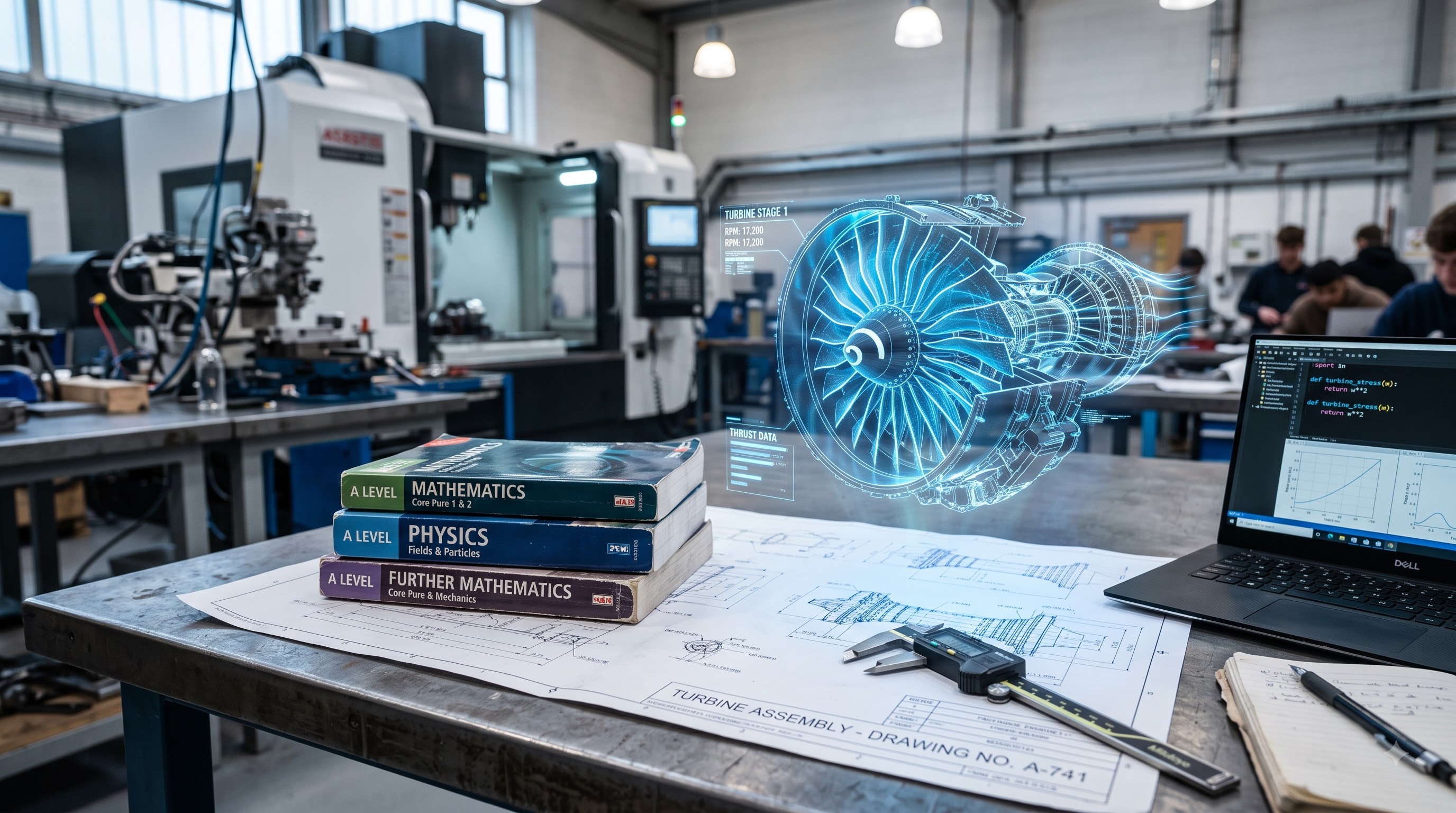
Deciding to pursue an engineering degree is the first step toward a dynamic, future-proof career. However, the path to a prestigious university program begins long before you write your personal statement; it starts in your sixth form. Navigating A Level Subject Combinations for Engineering Aspirants can feel overwhelming, but making the right choices early on is critical to securing your university spot and thriving in your degree.
Whether you dream of designing sustainable infrastructure, developing life-saving medical devices, or launching next-generation spacecraft, your post-16 subject choices form the foundation of your future. Let us break down the ideal a level subject choices for engineers and how to tailor your academic profile to meet your specific career goals.
The Non-Negotiable Core: Maths and Physics
When looking at the standard A level subjects for engineering, two subjects stand out above the rest: Mathematics and Physics. Together, these form the bedrock of almost every engineering discipline.
Mathematics is universally mandatory. When checking the UCAS entry requirements for undergraduate engineering, you will find that a strong grade in A Level Maths is expected across the board. Furthermore, it is wise to pay attention to the essential mathematics modules for engineering applicants. Pure maths provides the necessary calculus and algebra, but modules in Mechanics are incredibly beneficial for understanding forces, motion, and structural integrity.
This brings up a common question: can I do engineering without A Level Physics? The short answer is yes, but it heavily depends on the branch of engineering and the university. While some specialized programs (like software or chemical engineering) might accept other sciences, omitting Physics will severely limit your options for mechanical, civil, and aerospace degrees.
If you are a latecomer to the STEM pathway and lack the necessary mathematical foundation, do not panic. Several universities offer a foundation year or intensive bridging courses for students without A Level Maths to bring them up to speed before the rigorous degree begins.
The Further Maths Dilemma
A frequent source of anxiety for students is the question: is Further Maths required for engineering degree admissions?
For the vast majority of universities, Further Maths is highly recommended but not strictly mandatory. However, if you are looking at the A Level requirements for top engineering universities (such as Oxford, Cambridge, or Imperial College London), having Further Maths gives you a distinct competitive advantage.
When comparing A Level Further Mathematics vs Physics for engineering, remember that Physics is usually a strict prerequisite, while Further Maths acts as a powerful differentiator. If you have to choose between the two, Physics is generally the safer bet to keep your options open. However, taking both alongside standard Maths is widely considered the best a level combination for engineering at elite institutions.
Tailoring Your Subjects to Your Engineering Niche
Engineering is a broad sector. Once you have your core subjects locked down, your remaining choices should reflect your intended specialization. By consulting the Russell Group informed choices for STEM careers, you can see how different electives align with specific engineering branches.
Civil and Structural Engineering
If you want to shape the physical world around us, you need an analytical yet practical mindset. The best A Level subjects for civil engineering typically include Maths, Physics, and a third subject like Design and Technology (D&T), Geography, or Economics. Geography is particularly useful for understanding environmental impacts and topography, while D&T hones your spatial awareness and practical design skills.
Aerospace and Aeronautical Engineering
Aerospace is notoriously math-heavy and competitive. If you are wondering how to pick A Levels for aerospace engineering, prioritize maximum mathematical rigor. The ideal trio is Maths, Further Maths, and Physics. A fourth subject could be Computer Science or Chemistry, but the focus must remain on mastering advanced mechanics and thermodynamics.
Chemical Engineering
Unlike mechanical or civil routes, chemical engineering demands a deep understanding of molecular science. The standard chemical engineering A Level prerequisites are Maths and Chemistry. Physics is highly recommended as a third subject. If you are choosing between Chemistry and Computer Science for engineering, and you want to work in pharmaceuticals, energy, or materials science, Chemistry is an absolute necessity.
Biomedical Engineering
Biomedical engineering sits at the fascinating intersection of human biology and technology. The optimal subject combinations for biomedical engineering usually include Maths, Physics, and Biology. Some universities will accept Chemistry in place of Physics, but having a solid foundation in how biological systems operate is crucial for designing prosthetics, artificial organs, and medical software.
Navigating University Admissions and Extras
Getting into a top-tier engineering program requires more than just picking the right subjects; it requires strategic planning.
The Fourth A Level
Many ambitious students wonder about the impact of fourth A Level on engineering admissions. Will taking four subjects guarantee a spot at a top university? Generally, universities base their conditional offers on three A Levels. Achieving three A* grades in Maths, Physics, and Further Maths is far more impressive than getting four B grades. Only take a fourth A Level if you are confident it will not dilute your performance in your core subjects.
Admissions Tests
Top universities often require candidates to pass rigorous entrance exams to prove their problem-solving capabilities. If you are applying to elite institutions, you must prepare for the PAT and MAT exams for engineering entry (the Physics Aptitude Test and Mathematics Admissions Test, respectively). The critical thinking skills developed in Further Maths and Physics are vital for scoring highly on these assessments.
Actionable Tips for Engineering Aspirants
To summarize, here is how to build the ultimate A Level profile for an engineering degree:
-
Lock in the Core: Always choose A Level Mathematics. Add Physics unless you are exclusively targeting chemical or software engineering.
-
Consider Further Maths: If you are aiming for top-tier universities, strongly consider taking Further Maths.
-
Match your Third Subject to your Niche: Use Chemistry for Chemical Engineering, Biology for Biomedical, and Design & Technology or Geography for Civil.
-
Focus on Quality Over Quantity: Prioritize exceptionally high grades in three relevant subjects rather than spreading yourself too thin over four.
-
Check Specific Requirements: Always verify the exact entry criteria for your target universities on UCAS, as requirements can fluctuate annually.
Choosing your post-16 subjects does not have to be a guessing game. By selecting a rigorous, well-aligned combination of A Levels, you will not only satisfy admissions tutors but also equip yourself with the exact academic tools required to thrive in a demanding, rewarding engineering degree.